Prompts are the new source code. In the age of autonomous AI agents, the instructions you give a model are not suggestions - they are the program. A vague prompt produces vague results. A precise prompt produces precise results. And somewhere between the two, there is an optimal set of instructions that extracts the absolute maximum performance from a model on a given task.
The problem is finding it. And as it turns out, humans are entirely the wrong tool for the job.
Most teams treat prompt engineering as a craft. A human writes a prompt, eyeballs the output, adjusts a sentence, and tries again. This works well enough for simple chatbots, where "good enough" is the standard. But for autonomous security testing - where a missed vulnerability is a real exposure, not a stylistic preference - human intuition is not a viable optimization strategy. You need something that can explore the massive search space of language faster, more systematically, and without getting tired after revision number twelve.
When Andrej Karpathy released autoresearch - a system that lets an agent modify training code, run experiments, and improve a model overnight without human intervention - we saw a pattern. If a system can iterate on code to improve model performance, why couldn't a system iterate on prompts to improve agent performance?
So, we built exactly that. We created an infrastructure that engineers prompts the way a researcher runs experiments: automatically, iteratively, and relentlessly against a measurable objective. The results surprised even us.
The Insight: Navigating the Search Space
Here is the key realization that changed our trajectory. For any well-defined task, there exists a specific instruction set that maximizes an LLM's performance. The space of possible phrasing is practically infinite, the relationship between a specific word and the model's performance is highly non-linear, and humans are remarkably bad at navigating it.
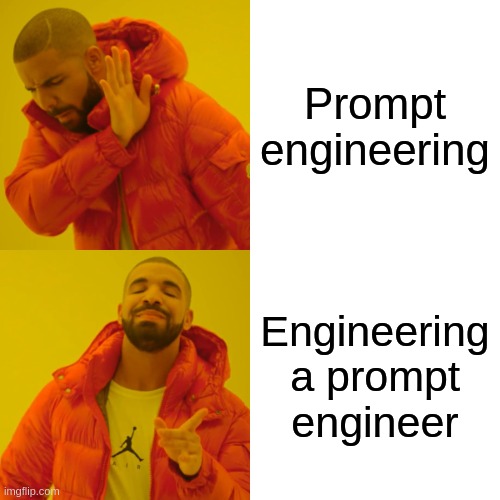
This is, fundamentally, a complex search problem. And search problems require programmatic solutions: define a metric, run automated experiments, capture the deltas, and iterate. The human's role shifts from writing the prompt to designing the machine that finds the prompt.
But here is the critical differentiator: when the architects designing that machine are elite offensive cybersecurity experts, the process transcends standard machine learning optimization. It becomes an absolute game-changer. The machine does the grueling search, but the domain experts define the guiding exact contours of what success looks like in the wild.
The Setup: A CTF as a Benchmark
To optimize anything, you need an unambiguous metric. Not "the output looks reasonable," but a concrete, binary signal of success or failure.
We chose a Capture the Flag (CTF) challenge as our benchmark. Since Versa is building autonomous cybersecurity agents, a CTF mirrors the kind of reasoning our agents need in the wild. Each level has an objective answer, success is binary, and the tasks require genuine reasoning rather than pattern matching. Crucially, each level is harder than the last, representing a meaningful leap in the agent's ability to reason through complex execution chains.
Our target metric was well defined but simple: the number of CTF levels solved within a strict five-minute window per task.
The agent had five minutes per level. No extensions. No retries. No internet access to look up walkthroughs. It had to reason its way through from first principles. If it timed out, it was a clean, unambiguous failure.
We started with a baseline prompt written the way the rest of the industry writes them - by a human, using experience and intuition. We pointed our agent at the CTF, set the timer, and watched.
It solved one level. Then, it hit a brick wall.
The prompt was not wrong. It contained relevant context and a sensible structure. But "sensible" is not "optimal." This is where most engineering teams would sit down, stare at the logs, brew another coffee, and start rewriting. We did something entirely different.
The Loop: Proprietary Optimization Engine
Instead of manually revising the prompt based on what went wrong, we handed the steering wheel over to proprietary optimization infrastructure.
The optimization loop works as follows: the agent attempts the CTF using the current prompt. When it fails a level, the system captures deep execution telemetry - where the reasoning branched, where the agent stalled, and the exact friction points in the logic. This telemetry is fed into optimization engine. The engine systematically digests this state, maps the failure to the semantic structure of the prompt, and algorithmically generates a newly calibrated instruction set. The revised instructions are then tested from scratch against the same benchmark.
We did not hardcode rigid security rules into the optimizer itself. Instead, our offensive security experts designed the evaluation environment, the reward functions, and the telemetry parameters. The engine is a pure optimization vehicle designed to navigate the high-dimensional space of prompt logic, but its objectives are forged by world-class security experts.
This fusion — machine-speed algorithmic iteration bound by top-tier offensive security intuition — produces capabilities that standard AI labs simply cannot replicate. How exactly does the engine translate a failed exploit attempt into the perfect algorithmic phrasing to bypass a filter? That is our secret sauce.
The system runs this entire workflow end-to-end. No human reviews the intermediate prompts. No human reads the logs. It is a relentless, automated grind.
The Results: From One to Seven
The progression was not a clean, upward curve. It was a fascinating algorithmic battle.
The human-written prompt solved one level. Then the system took over. The second iteration cracked a second level. Progress.
But the third iteration failed on level three. The engine detected the regression, rolled back the semantic changes, adjusted its parameters, and pushed in a completely different direction. Some micro-adjustments helped. Some caused catastrophic logic failures. When an iteration failed, the engine learned the boundary, discarded it, and pivoted.
Gradually, level by level, the system trained its way through the logic gaps. Four levels solved. A long plateau of failures and rollbacks. Then five. Then six. And finally, seven.
From one to seven levels. No human touched the instructions after the baseline. The system found the optimal path itself through dozens of microscopic, non-obvious adjustments that a human engineer would never think to make. It reordered logical priorities, added bizarrely specific constraints for edge cases, and completely restructured the agent's reconnaissance approach.
The difference between a human's "good enough" prompt and a machine-optimized prompt was the difference between a stalled agent and an elite one.
Why This Matters for Autonomous Security
At Versa, our agents operate autonomously against real applications. They probe for vulnerabilities, chain findings together, and produce actionable intelligence. The quality of their performance depends entirely on the exactness of their operating instructions. Better instructions mean deeper exploitation chains and zero blind spots.
Until now, improving those instructions scaled linearly with human effort and was heavily bottlenecked by human imagination.
Optimization engine shatters that bottleneck. We define the objective - vulnerabilities found, chain complexity achieved - and let our system iterate toward it at machine speed. But because the parameters of success are architected by seasoned offensive operators, the agent doesn't just learn to solve language puzzles; it learns to systematically hunt like a hacker. The resulting performance is entirely unmatched in the industry.
What Comes Next
The CTF experiment was a proof of concept, but the pattern generalizes to everything we do. Any task with a measurable outcome can be optimized this way. Reconnaissance accuracy. Exploitation success rates. Report completeness. Each becomes an objective function for the optimization engine, and each loop makes our agents meaningfully better at what they do.
We are applying this infrastructure across Versa's entire agent pipeline - not as a one-time tuning step, but as a continuous process. As targets change, as models improve, as new attack patterns emerge, the system re-optimizes. The core programming evolves alongside the threat landscape, without waiting for a human to notice that something could be better.
The era of hand-crafted prompts is ending. The human's job is no longer to write the perfect prompt. It is to build the machine that creates it, and inject it with the DNA of domain expert minds.
And we have built that machine.